Buying land in Los Olivos can feel full of promise. You may picture a home site, a small vineyard, equestrian improvements, or long-term hold potential. But in this part of Santa Barbara County, a parcel’s value often depends less on how it looks and more on whether it is legal, accessible, and serviceable. This guide walks you through the due diligence essentials that matter most before you move forward. Let’s dive in.
Why due diligence matters in Los Olivos
Los Olivos sits within Santa Barbara County’s Santa Ynez Valley Planning Area, where county plans help shape what can be done on the land. The County describes the area as having a scenic pastoral character and a strong agricultural tradition. That planning context matters because a beautiful parcel is not automatically a buildable one.
If you are buying land here, you need to verify more than location and views. You need to confirm zoning, parcel legality, access, water, wastewater, and site constraints before treating the property as a candidate for development or improvement. That is especially important for acreage, vineyards, ranch properties, and other lifestyle assets common in the Los Olivos market.
Start with county land use rules
Your first step is to understand the county land-use framework that applies to the parcel. Santa Barbara County’s community and specific plans are adopted as amendments to the Land Use Element and related planning documents, and the County states that its general plan must cover the full planning area. In practical terms, that means you should check zoning, setbacks, land-use code, and any plan policies before making assumptions.
County online tools can help you begin this review quickly. The most useful starting points are Find My Zoning, Permit History by Parcel Number, and the County Surveyor’s map and records resources. These tools can show zoning details, prior approvals, recorded maps, and signs of development history that deserve a closer look.
Even at this early stage, it helps to separate what is documented from what is marketed. A listing may describe a parcel as ready for a specific use, but the county record is what matters when you begin your diligence.
Check parcel validity early
Parcel validity is its own issue. If the history of a parcel is unclear, the County Surveyor offers a Parcel Validity Search form, and the form notes that the search may not be complete. In some cases, a Certificate of Compliance application may be required to prove parcel validity.
That means a parcel can raise questions even if it has been bought, sold, or described a certain way in the past. If you are considering land in Los Olivos, confirm that the parcel is legally recognized before you spend time and money on larger development assumptions.
Confirm permitted use and buildability
A key question is not only what the parcel is today, but what Santa Barbara County will allow you to do with it. County code says development must be consistent with zoning, setbacks, lot coverage, parking, and the Comprehensive Plan. If your goal includes an estate home, vineyard, equestrian facility, accessory structures, or a future lot split, each of those uses should be tested against current county standards.
This is where many buyers realize that legal creation and actual buildability are not the same thing. County land-division standards for a residentially developable parcel specifically address water supply, sewage disposal, access, slope stability, agricultural viability, habitat, and hazards. A parcel may be legal on paper and still fall short during a buildability review if one of those items cannot be satisfied.
Understand the agricultural setting
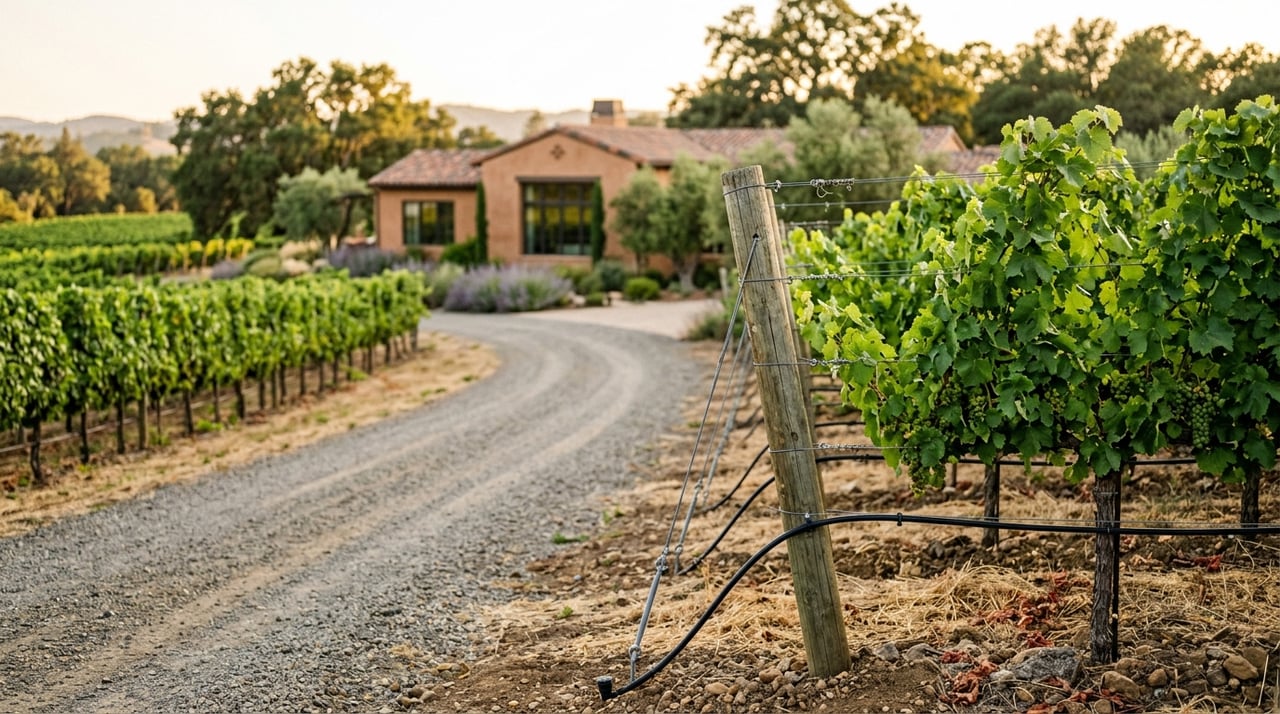
Los Olivos is surrounded by active agricultural uses, and that context should shape your expectations. Santa Barbara County states that its Agricultural Preserve Program is intended for the long-term conservation of agricultural and open space lands, and the County also maintains a Right-to-Farm program page. For buyers, this means the surrounding landscape is part of the area’s long-term identity.
If you are buying in Los Olivos, it is wise to approach the property as part of a working rural environment rather than a suburban one. That does not limit opportunity, but it does mean agricultural context should be part of your due diligence from the start.
Treat access as a separate review
Physical access is not the same as legal access. County code says a parcel should have existing private-road access that meets fire-agency roadway standards and connects to a public road or right-of-way easement, or the ability to establish legal access that meets those standards. A visible dirt road or long-standing informal use pattern is not enough on its own.
You should verify recorded access rights through title, survey, and map review. County Surveyor parcel-map materials reference public and private easements, utility easements, roadway dedications, and waiver of abutter’s access rights. Those details can affect how the parcel is used, improved, financed, or insured.
Why title and survey review matter
Rural land often carries recorded details that are easy to miss without a careful review. Easements, dedications, and access limitations may not be obvious during a site visit. That is one reason a land purchase in Los Olivos usually deserves more than a basic visual inspection.
A thoughtful review can help you understand whether the property has reliable legal access, where improvements may be placed, and whether any third-party rights affect your plans. For larger or more complex parcels, this step is often central to the entire purchase decision.
Resolve water and wastewater questions separately
Water service and wastewater service should never be treated as the same issue. In Los Olivos, water service is provided by the Santa Ynez River Water Conservation District, Improvement District No. 1, which states that it serves Los Olivos and provides potable domestic and irrigation water. Its rules address installation of services, meters, water mains, and related customer obligations.
Wastewater is a different matter. The Los Olivos Community Services District states that it was formed by local voters in 2018 to fund facilities needed to collect, treat, and dispose of sewage, wastewater, recycled water, and storm water in Los Olivos. Its materials also direct water-bill and meter-account questions to the water district, which reinforces that the two systems are separate.
Septic versus sewer in Los Olivos
The septic-to-sewer question should be resolved early in your diligence period. The Los Olivos Community Services District states that the state and county began requiring Los Olivos to comply with a septic-to-sewer conversion program in 2015, and its 2026 updates still describe groundwater monitoring wells, engineering design, and community sewer planning. That makes wastewater planning an active local issue, not a minor detail.
If a parcel will rely on a private sewage system, county code says it must meet county permitting and installation requirements, including percolation tests. Special-design systems require Environmental Health approval. If a parcel will rely on private wells or a small water system, county code also outlines substantial documentation requirements such as well logs, water-quality testing, basin-capacity findings, and engineer certifications.
Review site conditions before you commit
Site conditions can reshape a land purchase quickly. County code says setbacks may be increased where necessary for adequate drainage, and it recognizes that hillside terrain, special soil and geological conditions, combustible vegetation, and other factors can create fire, flood, erosion, sewage, and subsidence risks. On acreage in and around Los Olivos, drainage and soils review can be just as important as survey work.
That is why you should evaluate the land in the sequence a serious buyer would use, not in the order a listing presents it. Start with entitlement and legal basics, then move into access, water, wastewater, and physical site constraints. This approach can save time, reduce uncertainty, and help you avoid spending money on plans that may not be feasible.
Future lot splits need separate analysis
If your strategy includes a future split or parcel map, treat that as its own project. The County Surveyor’s tentative-subdivision checklist calls for a licensed surveyor or registered civil engineer to prepare the map, a title report not more than 60 days old, and owner authorization. That is a strong sign that subdivision due diligence goes beyond a standard purchase escrow.
In other words, buying a parcel that might be splittable is not the same as proving that a split will be approved. If future division is part of your investment thesis, it should be evaluated carefully and independently.
Build the right due diligence team
Land purchases in Los Olivos often benefit from a coordinated professional team. Based on county access, water, sewer, and parcel-map requirements, buyers commonly need input from a licensed land surveyor, civil engineer, geotechnical or soils consultant, title officer, and land-use attorney. The exact mix depends on the parcel and your intended use.
The county’s permitting materials also point to a practical workflow. Confirm zoning, review permit history, gather case-specific submittal checklists, and use outside-agency contacts when the project touches more than one review body. For a buyer, the larger message is simple: resolve entitlement, access, water, wastewater, and site constraints before treating a parcel as ready for a home, vineyard, or equestrian program.
A practical Los Olivos land checklist
Before you remove contingencies, make sure you have reviewed the essentials:
- Zoning and applicable county planning policies
- Permit history by parcel number
- Recorded maps and surveyor records
- Parcel validity status, if history is unclear
- Permitted uses for your intended plans
- Legal access and recorded easements
- Water service availability or private water requirements
- Wastewater pathway, including sewer or septic requirements
- Drainage, soils, slope, and hazard considerations
- Additional review needed for any future lot split
A parcel does not need to be perfect to be worthwhile. It does need a clear path that matches your goals, timeline, and risk tolerance.
If you are considering land in Los Olivos, experienced local guidance can help you ask the right questions in the right order. For confidential advice on acreage, vineyards, ranch properties, and other lifestyle assets in the Santa Ynez Valley, connect with Laura Drammer.
FAQs
What does due diligence mean when buying land in Los Olivos?
- Due diligence means verifying that the parcel is legal, accessible, and serviceable before you assume it is buildable or suitable for your intended use.
Why is parcel validity important for Los Olivos land buyers?
- Parcel validity matters because a parcel’s legal status may need separate confirmation through county review, and in some cases a Certificate of Compliance may be required.
How do Los Olivos buyers check zoning and permit history?
- Santa Barbara County provides tools such as Find My Zoning, Permit History by Parcel Number, and County Surveyor map and records resources for early research.
Do Los Olivos land parcels need legal access?
- Yes. County code says a parcel should have access that meets fire-agency roadway standards and connects to a public road or right-of-way easement, or be able to establish legal access that meets those standards.
Is water service the same as wastewater service in Los Olivos?
- No. Water service is provided by the Santa Ynez River Water Conservation District, Improvement District No. 1, while wastewater planning involves the Los Olivos Community Services District.
Why should septic and sewer be reviewed early for Los Olivos land?
- The Los Olivos Community Services District describes an ongoing septic-to-sewer conversion program, so buyers should resolve wastewater requirements early in escrow.
Can a legally created parcel still be hard to build on in Los Olivos?
- Yes. County standards also address water supply, sewage disposal, access, slope stability, agricultural viability, habitat, and hazards, which can affect buildability.
What professionals help with Los Olivos land due diligence?
- Depending on the parcel, buyers often benefit from a licensed land surveyor, civil engineer, geotechnical or soils consultant, title officer, and land-use attorney.